
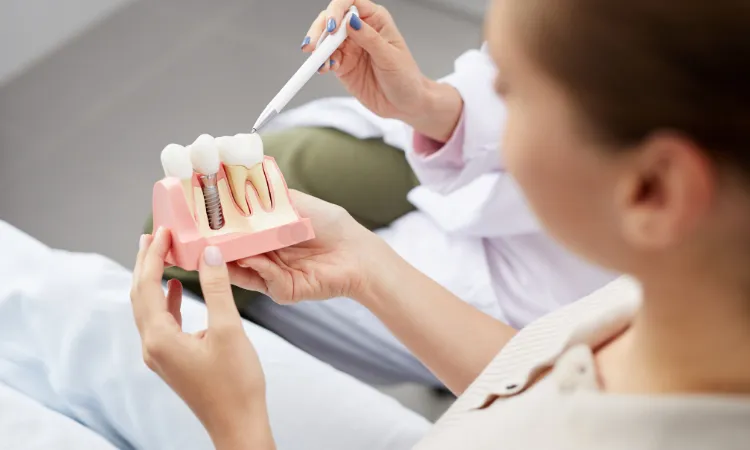
When patients consider dental implants, they usually have two big questions. First: will it hurt? Second: when can I eat a steak again? That second question matters more than you might think. Food is a huge part of our daily lives, from family dinners to favorite restaurants to holiday meals. Missing teeth can take all of that away. So when we talk about implants, we’re really talking about getting your life back.
But eating with implants is a journey, not a light switch. Let’s walk through what to actually expect.
The First Few Days: Soft Foods Only
Right after implant placement, your mouth needs to heal. The implant is settling into your jawbone, and your gums are recovering. This is not the time to test your chewing power.
Stick to foods that require little to no chewing:
- Yogurt, pudding, and smoothies
- Mashed potatoes and soft-cooked vegetables
- Scrambled eggs
- Soups and broths
- Applesauce
Avoid anything hot, spicy, or crunchy. Also skip straws for the first few days. The suction can dislodge the blood clot that’s helping you heal.
Weeks Two Through Six: Gradual Expansion
As soreness fades, you can start adding more texture. Many patients are comfortable with:
- Soft pasta and rice
- Flaky fish
- Ground meat
- Soft bread
- Canned or soft fruits
This is also the stage where a temporary crown or healing cap may be in place. Be gentle with it. Chewing directly on the implant site is still off-limits. Use the other side of your mouth when you can.
The Full Healing Period: Three to Six Months
Dental implants need time to fuse with your jawbone. This process, called osseointegration, typically takes three to six months. During this window, you’ll want to avoid putting pressure on the implant.
Most patients eat fairly normally during this time, as long as they avoid extremely hard foods. You’re not on a soft-food diet for six months. You’re just being smart about not challenging the implant directly.
After Your Permanent Crown
Once your implant has fully healed and your permanent restoration is in place, you can eat whatever you want. That’s the whole point of implants.
Unlike dentures, which can slip and limit what you eat, implants are anchored directly into your jaw. They function like natural teeth. You can bite into an apple. You can enjoy corn on the cob. You can order the steak.
That said, you still need to treat them with care. Implants don’t get cavities, but they can still develop gum disease around them, which can lead to failure. Good brushing, flossing, and regular dental visits are still essential.
What About Implant-Supported Dentures?
Some patients need a full arch of teeth replaced. In those cases, we may recommend implant-supported dentures. These snap or screw onto a few implants rather than resting on your gums.
With implant-supported dentures, chewing function improves dramatically compared to traditional dentures. You can eat most foods comfortably. However, very hard or sticky foods may still require some caution, depending on your specific restoration.
Restore Your Bite Today
Dental implants are a long-term investment in your ability to eat, speak, and smile with confidence. The healing period takes patience, but the payoff is a return to normal eating that lasts for decades with proper care.
At Red Maple Dental, Dr. Hoffert has completed an intensive implant residency and works closely with patients to plan every stage of the process. If you’ve been avoiding your favorite foods because of missing teeth, we can help.
Call our office to schedule a consultation. Let’s talk about what’s possible for your smile.